Of Infrared Expertise
Plus Alaska & Puerto Rico
Not Drones
For Facility Decision-Makers
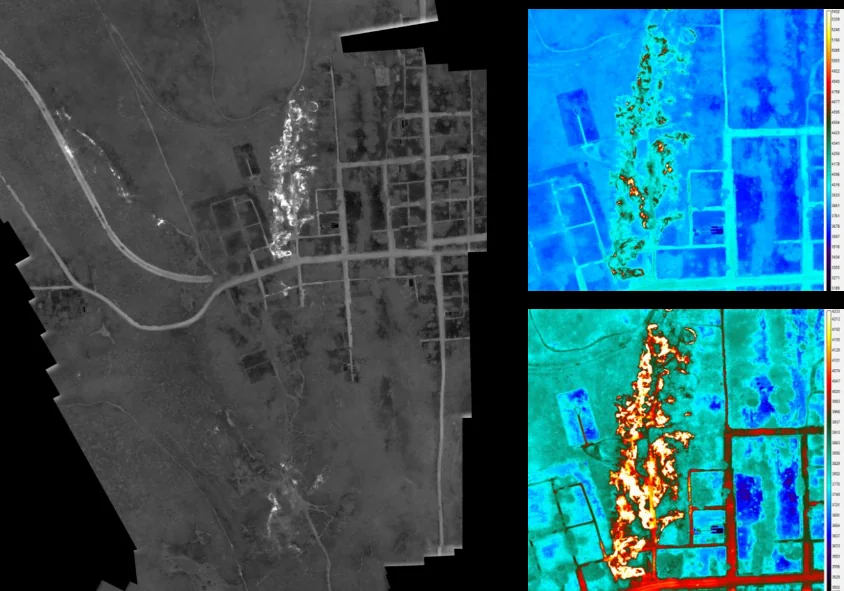
Aerial landfill fire and methane detection is a non-destructive inspection method that uses aircraft-mounted thermal imaging to identify subsurface combustion, smoldering events, and methane emission anomalies across an entire solid waste site. Where the waste mass is warmer than designed, or gas is migrating outside the gas collection footprint, our sensors capture that signature and georeference every anomaly.
The result is a site-wide inventory of every thermal and emission anomaly across the landfill, tied to your operations and GCCS drawings. Instead of waiting for surface symptoms to appear, your compliance and engineering teams know which zones need investigation, which require GCCS adjustment, and where the site is operating as designed.
We’ve been doing this work for decades using aircraft engineered specifically for thermal collection — not consumer hardware, not adapted equipment. The data is built to support air-quality reporting, combustion-prevention programs, and post-closure stewardship.
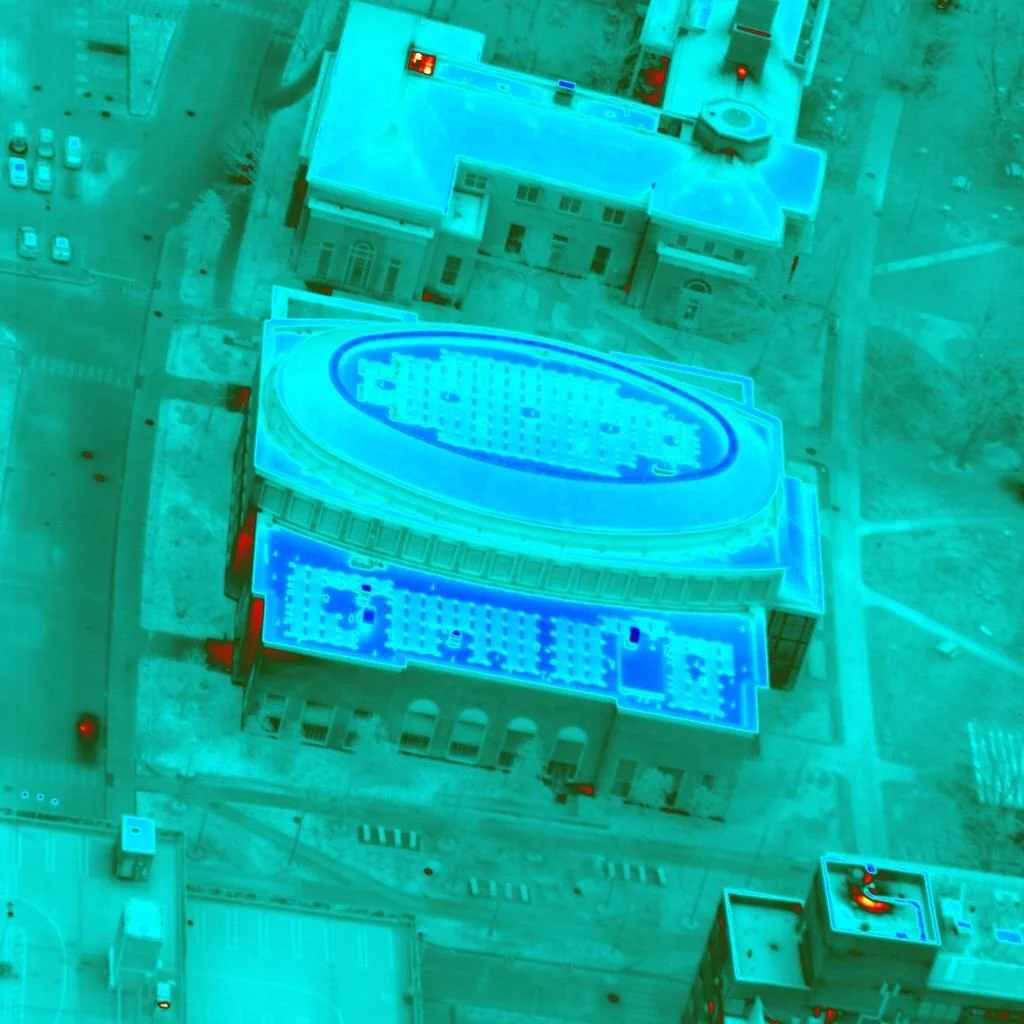
For a single cell or a known anomaly, ground-based thermography and short-range platforms have their place. For a full site or a multi-site portfolio, the math changes fast — coverage area, hazard exposure, and survey conditions all favor aircraft.
A single aircraft mission can scan the entire footprint of a municipal solid waste site in one flight window, with no ground-personnel exposure to subsurface combustion or gas hazards. Our thermal sensors operate in the spectral bands engineered for ground-surface temperature differentials at altitude — not the consumer-grade wavelengths typical of short-range UAS payloads. We fly when ambient atmosphere supports sharpest contrast.
The result isn’t just faster — it’s more consistent. Every cell is scanned in the same flight, under the same conditions, with the same sensor. That consistency is what makes the dataset defensible for regulatory, operational, and stewardship decisions.
Landfill problems escalate. A small subsurface oxidation event discovered late becomes a multi-month combustion response with engineered intervention, regulator coordination, and host-community fallout. A drifting methane signature outside the GCCS footprint becomes a Title V exceedance, a Subpart Cf report, or a capital request for system expansion that arrives with no warning. The cost of late discovery is almost always an order of magnitude higher than the cost of early intervention.
Aerial infrared converts late discovery into early intervention. Instead of waiting for symptoms to surface, the operator works from a site-wide thermal inventory captured under controlled conditions. Most programs recover the cost of the survey through avoided combustion response, prioritized GCCS adjustments, and stronger documentation in front of the regulator and the host community — the kind of return that compounds across the operational life of the site.
There is a third-order return that solid waste operators often discount until they need it: legal and insurance exposure. Subsurface combustion events at active landfills attract regulator response, host-community attention, and, increasingly, civil claims from adjacent property owners and downwind communities. Operators who can demonstrate documented thermal surveying on a defensible cadence are in materially better position to manage that exposure than operators who discover the event through public reporting. The survey is, among other things, evidence the operator was actively monitoring — and that evidence is among the strongest defenses available in the post-event environment.
Operators who run aerial inspection on a defensible cadence operate materially safer, materially better-documented, and materially more defensible sites than operators who don’t. The gap shows up in avoided combustion response cost, in stronger regulator and host-community standing, and in materially better posture against post-event legal and insurance exposure. The survey is an investment in the operational, compliance, and legal foundation of the site.