
Of Infrared Expertise
Plus Alaska & Puerto Rico
Not Drones
For Facility Decision-Makers
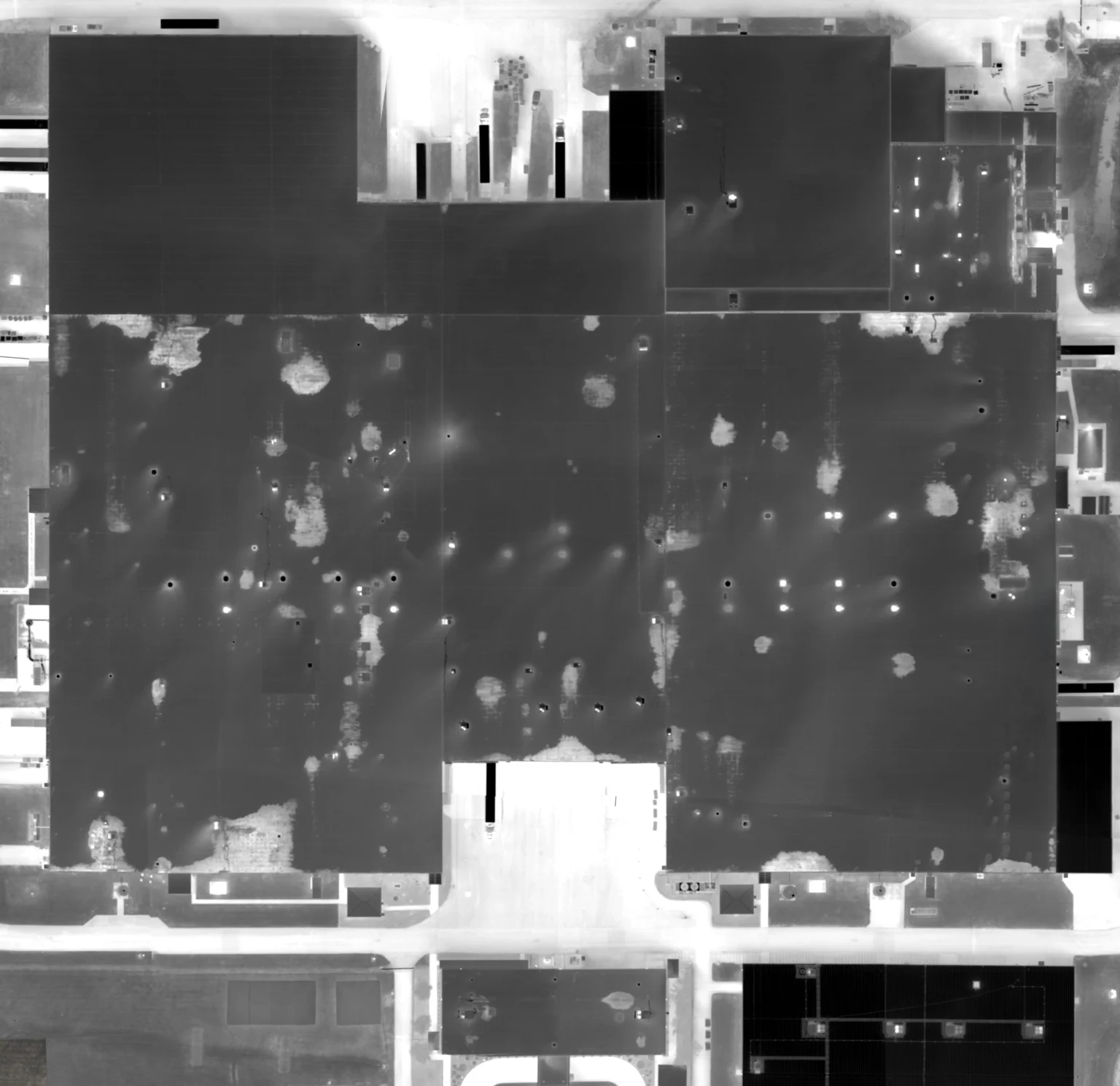
Aerial steam leak detection is a non-destructive inspection method that uses aircraft-mounted thermal imaging to identify failing steam lines, manhole losses, and conduit leaks across the entire underground distribution footprint. Where the soil above a leaking line is warmer than the surrounding ground, our sensors capture that signature and georeference every anomaly to its exact location.
The result is a ranked map of every active loss across your distribution system, tied to your existing as-built drawings. Instead of chasing complaints or excavating speculatively, your maintenance and engineering teams know exactly which segments need repair, which need replacement, and which are operating as designed.
We’ve been doing this work for decades using aircraft engineered specifically for thermal collection — not consumer hardware, not adapted equipment. The data is built to support engineering specifications, capital requests, and rate-base or regulatory reporting.
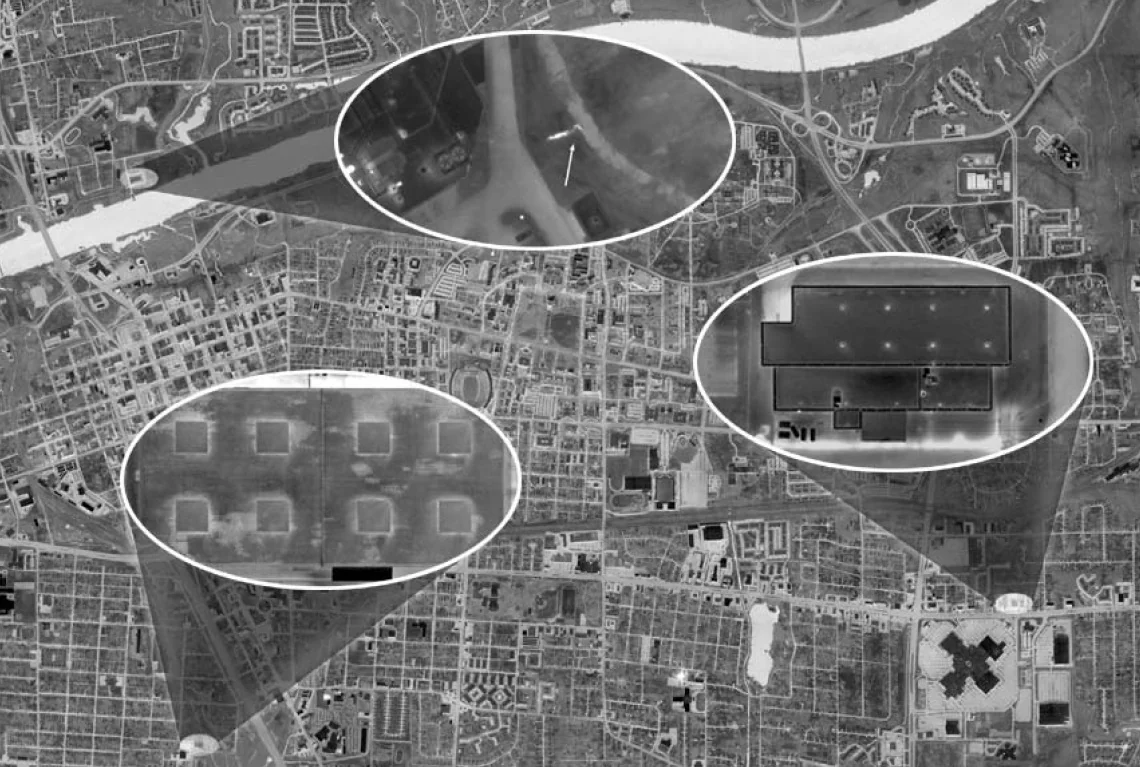
For a single manhole or a short segment, ground-based thermography and short-range platforms have their place. For miles of underground distribution, the math changes fast — coverage area, atmospheric consistency, and survey conditions all favor aircraft.
A single aircraft mission can scan the full distribution footprint of a major university, military installation, or city steam loop in one overnight flight. Our thermal sensors operate in the spectral bands engineered for ground-surface temperature differentials at altitude — not the consumer-grade wavelengths typical of short-range UAS payloads. We fly when the diurnal heat load has decayed and contrast is sharpest.
The result isn’t just faster — it’s more consistent. Every segment is scanned in the same flight, under the same conditions, with the same sensor. That consistency is what makes the dataset defensible for engineering and capital planning decisions.
Steam is one of the most expensive utilities a facility produces. Every pound lost to the ground is fuel burned for nothing — and for large distribution operators, those losses scale into the millions of dollars per year. The Department of Energy has consistently documented distribution losses of fifteen to twenty-five percent on aging networks, much of it concentrated in a handful of recoverable failures.
An aerial infrared survey changes the economics. Instead of chasing complaints or excavating speculatively, your team works from a ranked map of every active loss across the network. For most clients, the cost of the survey is recovered in fuel savings within a single heating season — and the repaired system delivers compounding savings for years afterward. The data also strengthens the capital case: when a segment is recommended for replacement, the thermal evidence supports the budget request in a way that anecdotal complaints cannot.
There is a second economic dimension that matters on aging networks: avoided consequential damage. A steam line failure under a city street or a campus quad rarely fails quietly. The repair cost is one line item; the lane closures, service interruptions, paved-surface restoration, and reputational exposure are the rest of the bill. Catching the precursor signature months earlier converts an emergency into a scheduled scope of work — and converts the political and operational risk into something the engineering team controls rather than responds to. The ROI math on a steam survey rarely needs to be argued; the harder argument is usually about which segments to address first, and the thermal data answers that question directly.
Decades of distribution work across universities, military installations, and municipal energy operators have produced a consistent pattern: the operators who survey on a defensible cadence run a measurably more efficient system than operators who don’t, and the gap widens as the network ages. The survey isn’t a cost line — it’s an investment in the operating efficiency, the capital posture, and the regulatory standing of the system.