Of Infrared Expertise
Plus Alaska & Puerto Rico
Not Drones
For Facility Decision-Makers
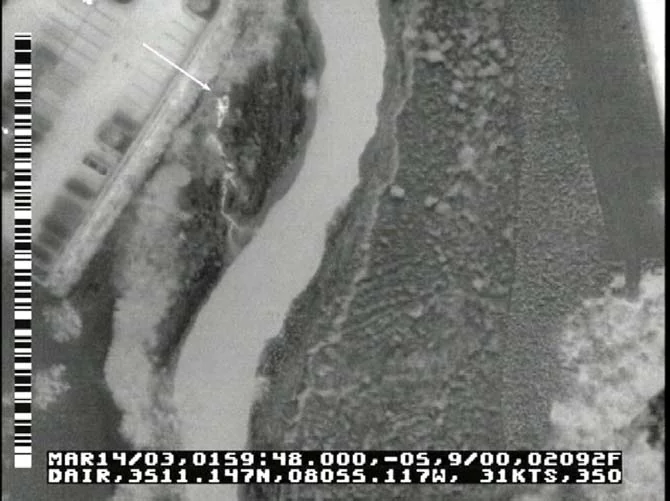
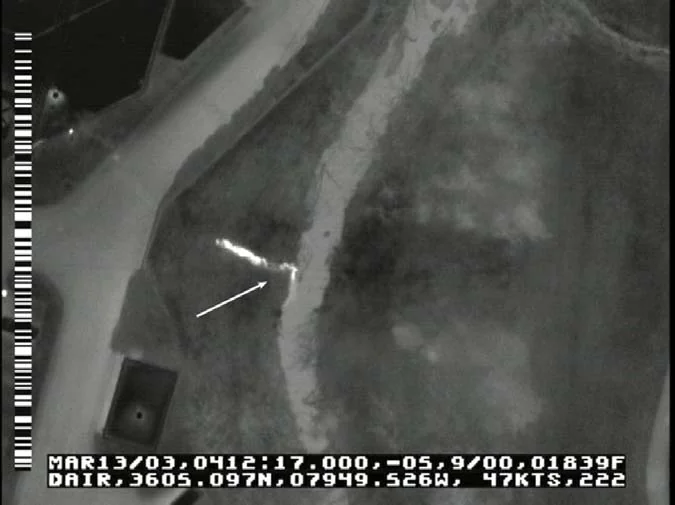
Aerial pollution and sewer leak detection is a non-destructive inspection method that uses aircraft-mounted thermal imaging to identify illicit discharges, sanitary exfiltration, stormwater infiltration, and outfall plumes across a municipal or campus water-management network. Where anomalously-temperature water enters surface waters or leaves a sanitary line, our sensors capture that signature and georeference every finding.
The result is a watershed-scale inventory of every active anomaly across the program, tied to your GIS. Instead of responding to complaints and exceedances, your environmental and engineering teams know which outfalls need attention, which lines need rehabilitation, and where the system is operating as permitted.
We’ve been doing this work for decades using aircraft engineered specifically for thermal collection — not consumer hardware, not adapted equipment. The data is built to support MS4 reporting, NPDES documentation, and capital workflows.
For a known outfall or a single reach of stream, ground-based thermography and short-range platforms have their place. For a full watershed, the math changes fast — coverage area, tidal and weather windows, and survey conditions all favor aircraft.
A single aircraft mission can scan the full receiving-water frontage of a major municipality or campus in one flight window. Our thermal sensors operate in the spectral bands engineered for water-surface and ground-surface temperature differentials at altitude — not the consumer-grade wavelengths typical of short-range UAS payloads. We fly under the tidal and atmospheric conditions that maximize contrast.
The result isn’t just faster — it’s more consistent. Every outfall and alignment is scanned in the same flight, under the same conditions, with the same sensor. That consistency is what makes the dataset defensible for MS4, NPDES, and capital decisions.
Water-management programs are graded by the regulator on what they know about their network — not on what they hope is true about it. An undetected illicit discharge, an unmapped exfiltration zone, or a stormwater infiltration source can each translate into permit exceedances, enforcement actions, and capital requirements that arrive with no warning.
An aerial infrared survey changes the posture. Instead of responding to complaints and exceedances, your program operates from a watershed-wide inventory of every active anomaly across the network. Most clients recover the cost of the survey through a combination of prevented enforcement risk, prioritized rehabilitation spending, and defensible documentation that strengthens the program’s standing with the regulator and the ratepayer.
There is a third return that often goes unmeasured: the program’s narrative position. Stormwater and sanitary utilities are accountable to elected officials, ratepayer commissions, and increasingly to the public through annual reporting. A documented aerial survey gives the program a fact base for the conversation. Capital requests grounded in thermal evidence are harder to deny; rate adjustments tied to documented network condition are easier to defend; and the stakeholder conversation shifts from anecdote to data. The survey is an investment in the program’s long-term operational and political standing, not just in next quarter’s repair list.
Water-management programs that survey on a defensible cadence are in a structurally stronger position with the regulator, the ratepayer, and the downstream litigation environment than programs that don’t. The survey is an investment in evidentiary posture as much as in operational efficiency, and the value of that posture compounds across every subsequent permit cycle and stakeholder conversation.