
Of Infrared Expertise
Plus Alaska & Puerto Rico
Not Drones
For Facility Decision-Makers
Aerial wildlife surveying is a non-destructive inspection method that uses aircraft-mounted thermal imaging to detect, count, and map warm-bodied animal populations across a working landscape. Where a metabolism produces a thermal contrast against the surrounding ground, our sensors capture that signature day or night, in cover or in the open, and georeference every detection.
The result is a landscape-scale population dataset across the entire study area, georeferenced and classified where the imagery supports it. Instead of accepting the bias of daylight visual counts or the cost of ground transects, your biology and program teams know which areas hold the population, which need management attention, and where habitat use is shifting.
We’ve been doing this work for decades using aircraft engineered specifically for thermal collection — not consumer hardware, not adapted equipment. The data is built to support agency reporting, NEPA documentation, and peer-reviewed research.
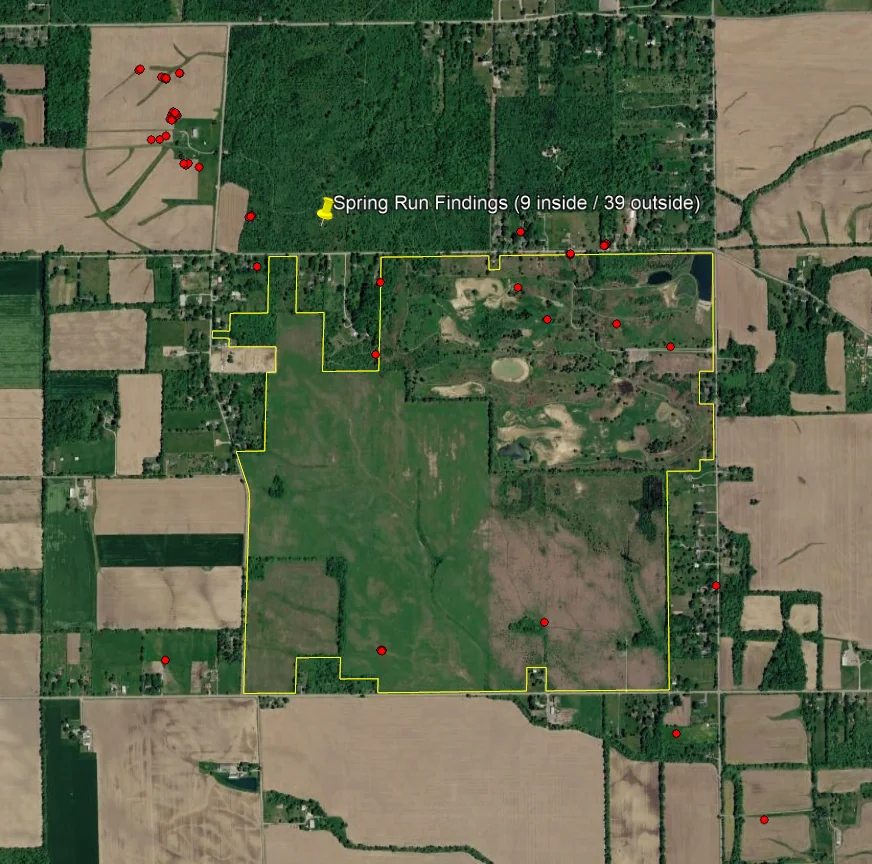
For a small, defined survey footprint, ground-based thermography and short-range platforms have their place. For a management unit, working landscape, or study area, the math changes fast — coverage area, biological window, and survey conditions all favor aircraft.
A single aircraft mission can scan an entire management unit or research area in one pre-dawn flight, capturing every detection under one set of conditions. Our thermal sensors operate in the spectral bands engineered for warm-target detection against terrestrial backgrounds at altitude — not the consumer-grade wavelengths typical of short-range UAS payloads. We fly when ambient temperatures are coolest and contrast is sharpest.
The result isn’t just faster — it’s more consistent. Every detection is captured in the same flight, under the same conditions, with the same sensor. That consistency is what makes the dataset defensible for agency, NEPA, and research decisions.
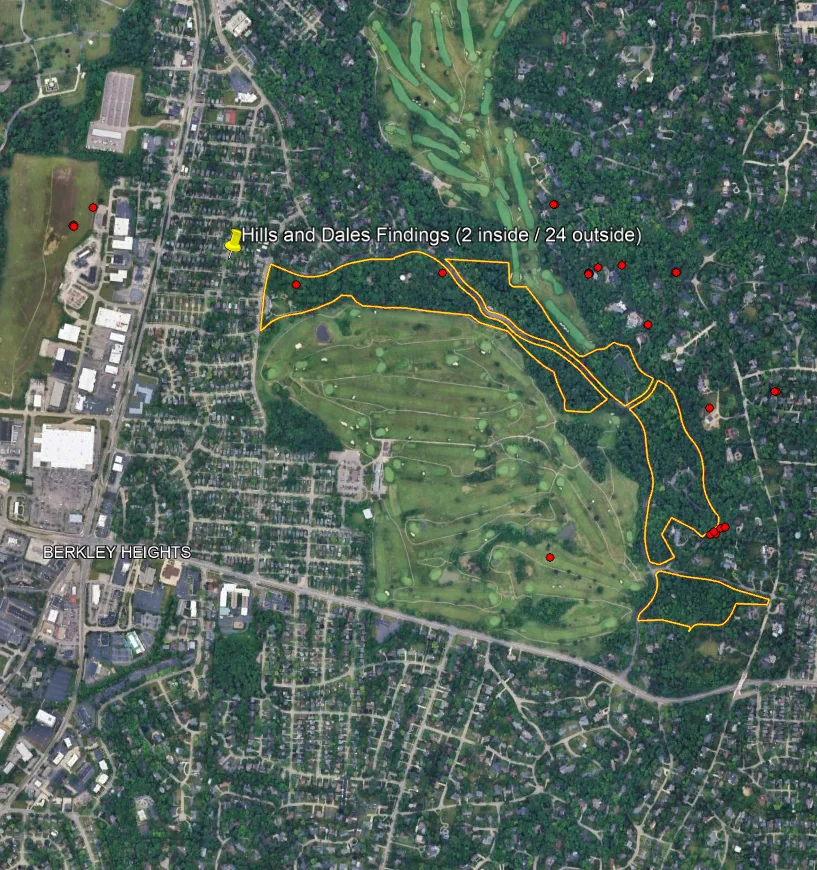
Wildlife programs operate on numbers — population estimates, harvest quotas, mitigation requirements, NEPA findings. When the underlying count is uncertain, every downstream decision inherits that uncertainty. Daylight visual counts are known to undercount in cover-rich landscapes. Ground transect data is expensive to scale across a management unit. Stakeholder-facing assessments that depend on stale or partial data don’t survive their first serious challenge.
Aerial infrared changes the math. Instead of accepting the bias and noise of conventional methods, your program operates from a landscape-scale dataset captured under controlled conditions. Most programs recover the cost of the survey through better harvest management, defensible mitigation reporting, and stronger footing in stakeholder and regulatory discussions — the kind of return that compounds across multiple management or research cycles.
There is a less-visible return that often justifies the survey on its own: program credibility. Wildlife programs operate under scrutiny from sportsmen and women, conservation groups, agricultural stakeholders, energy developers, and political leadership. The defensibility of the program’s numbers is the defensibility of the program itself. A documented aerial survey creates evidence the program can produce when the count is challenged — and the existence of that evidence often forecloses the challenge entirely. Over time, programs that survey on a defensible cadence build the kind of track record that protects their funding, their harvest authority, and their long-term ability to manage the landscape.
Wildlife programs that survey on a defensible cadence operate with materially stronger defensibility, materially better harvest management, and materially lower long-run cost than programs that mix methods or depend on intermittent counts. The survey is an investment in the program’s data foundation, and that foundation is the foundation of everything else the program does.